Mauritius, a slow travel destination: why longer stays appeal to families
Some trips are about ticking places off a list. Others are about taking the time to really experience them. With the latter, you don't leave after seven days. You stay for a few weeks, sometimes even a few months. Children settle into a routine, parents rediscover a gentler pace of life, and the destination stops being just a backdrop and becomes part of everyday life.
This is the idea behind slow travel: travelling less often, but staying longer and experiencing a place more deeply. For families with the flexibility to organise their time, Mauritius ticks all the boxes: a mild climate, unspoilt natural surroundings, a manageable time difference, international schooling options and a pace of life that encourages you to slow down.
Here's why longer stays in Mauritius are becoming increasingly popular with families, and how to plan one.
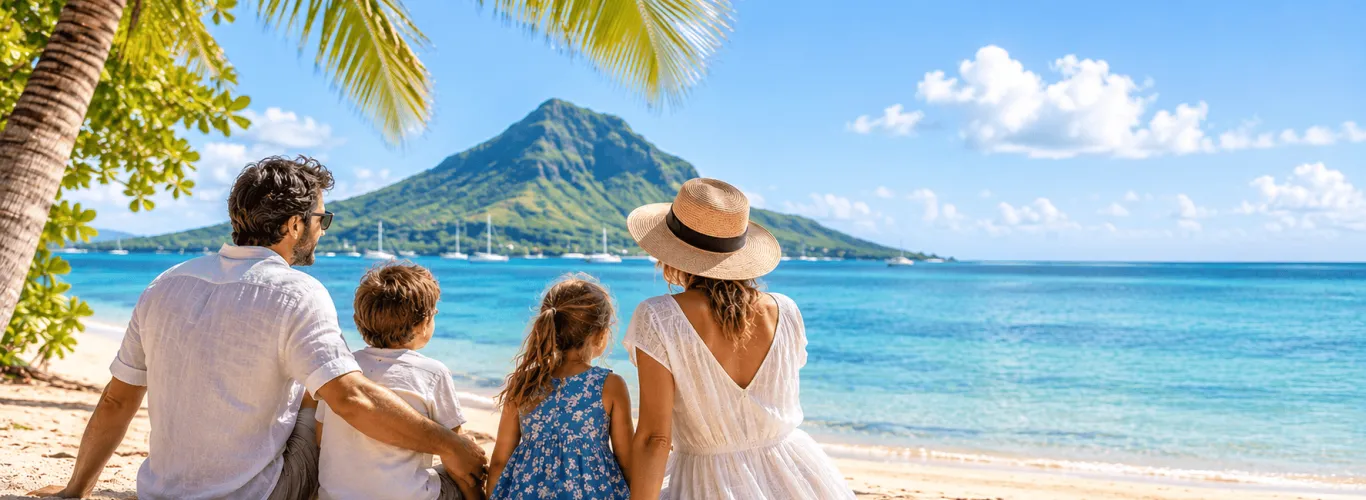
Find out why slow travel appeals to so many families and why Mauritius is an ideal destination for spending quality time together over several weeks or even months.
Slow travel in Mauritius: travelling at a gentler pace and staying longer
Slow travel is more than just a passing trend. According to the 2026 barometer published by the European Travel Commission and Eurail, the proportion of long-haul travellers who identify as slow travel enthusiasts rose from 22% to 26% in just one year. Holiday rental platforms are reporting a similar trend, with stays of a week or a month gaining ground over shorter breaks.
The idea is simple. Instead of moving from one place to another, you choose a destination and settle in. You shop at the local market, find your favourite café and learn the names of the beaches. You travel with time rather than against it.
For families, the benefits are immediate. A short trip often means a packed sightseeing schedule. A longer stay allows you to settle into everyday life, balance activities with free time and give children the chance to make a place their own.
Why affluent families are choosing longer stays
Families with the flexibility to organise their time often share the same priorities:
- Quality time together. Spending a few weeks together, away from the demands of everyday life, can strengthen family relationships.
- Flexibility. Remote working, running a business and more adaptable schedules make it possible to spend longer periods away.
- A valuable experience for children. Living in another country and encountering different languages and cultures broadens their horizons.
- A safe and comfortable environment. Families look for stability, quality services and genuine peace of mind.
These families share many of the characteristics of HENRYs, who seek a better balance between professional success and quality of life. They want to invest in their lifestyle as much as in their wealth. A longer stay can be the first step towards achieving that balance.
Remote working in Mauritius: working at the island's pace
Remote working is one of the main drivers of this trend. However, a destination needs to deliver on its promises. Here are three key factors to consider, all of which Mauritius is well placed to offer.
Time difference
Mauritius stays on UTC+4 all year round. The island is therefore two to three hours ahead of Central Europe, depending on the season, and shares the same time zone as Dubai. You can work in the morning, in sync with your teams, then enjoy the lagoon in the afternoon.
Internet connectivity
Fibre-optic broadband is widely available, with packages ranging from 50 Mbps to 1 Gbps, depending on the provider. Mobile networks and 4G/5G home broadband services offer additional options. Check coverage at your chosen address before booking, as availability varies from one area to another.
Places to work
A villa with a dedicated workspace, a café with Wi-Fi or a quiet spot: having a choice of places to work makes all the difference. Our restaurant in Baie du Cap also serves as a coffee shop, with Wi-Fi, and welcomes remote workers throughout the day.
The Premium Visa: the legal framework for a longer stay
Tourists can stay in Mauritius for up to 180 days a year. Beyond that, an appropriate visa is required. For families wishing to stay longer while working remotely, the Premium Visa is the most common option.
The key points, according to the Economic Development Board (EDB) website:
- It is free of charge and can be applied for online.
- It allows stays of more than six months, for up to one year, and is renewable.
- Your work and income must come from outside Mauritius. You cannot work for a Mauritian employer on this visa.
- The visa can cover family members.
- The published requirements include a minimum monthly income, with an additional amount for each dependent child, as well as travel and health insurance.
Visa holders can also apply for another type of permit at a later date, such as an Occupation Permit to work or invest in Mauritius. The Premium Visa does not automatically lead to permanent residency.
One tax point to bear in mind: funds deposited into a Mauritian bank account may be taxable if they have not already been taxed abroad. Seek advice from a tax specialist to check how the rules apply to your situation before travelling. For the latest requirements, also consult the Passport and Immigration Office
Temporary schooling: educating children during a longer stay
This is often the question that determines how long a family can stay. There are three main options, which can also be combined.
Joining an international or French school during the academic year
Mauritius has a wide network of French schools (AEFE), international schools (Cambridge, IB) and English-speaking schools. These are private, fee-paying institutions. If a family arrives partway through the school year, enrolment may still be possible, subject to availability. The most sought-after schools have waiting lists, so contact them as early as possible.
For more details, read our guide to family life in Mauritius.
School calendars: something to check
School calendars vary from one institution to another. Mauritian state schools start their academic year in January, while many French and international schools begin in August. Admission dates and the possibility of joining partway through the year depend on each school. It is therefore best to contact them well in advance.
Homeschooling
Online learning programmes or a private tutor can help children continue their education during a stay of a few months. Many families choose this option for a limited period, combining it with sports, workshops and activities with other children.
The Premium Visa and schooling
Children of Premium Visa holders can attend private schools. Check the arrangements directly with the school and the EDB.
Each family makes its choice according to the age of their children, the length of their stay and their plans. The key is to plan ahead.
The pace of life: what families find in Mauritius
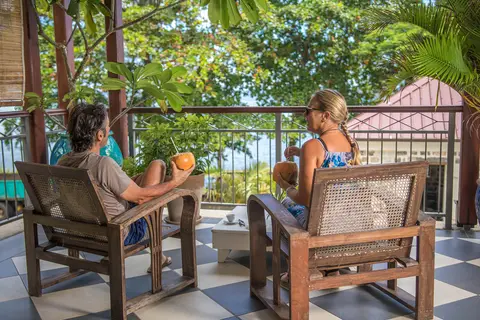
After a few weeks, families often notice the same changes. Days begin to follow the rhythm of the sun. You get up early, make the most of the morning, swim in the lagoon, enjoy a late lunch and take an afternoon nap. Children play outdoors, while parents find a balance that can be hard to achieve elsewhere.
There is no shortage of activities: hiking up Le Morne Brabant, kitesurfing, paddleboarding, snorkelling, golf and cycling. Golf enthusiasts can discover the island's best courses in this article.
The best time for a longer stay is during the austral winter, from May to October. Temperatures remain mild, between 20 and 27°C during the day. The air is drier and the risk of cyclones is very low. The austral summer, from November to April, is hotter and more humid. The cyclone season can occasionally disrupt activities, but this is relatively rare.
Long stays in Mauritius: should you rent or buy a villa?
There are two options for families who love Mauritius.
Renting for the duration of your stay
This is the most flexible option. You can get to know the island, explore different areas and experience the lifestyle without making a long-term commitment. Choose a villa or apartment for a few weeks or several months.
Investing in a villa and renting it out the rest of the year
This is the principle behind a dual-purpose residence. You enjoy your property during longer stays, while a local team takes care of holiday rentals for the rest of the year. The villa remains occupied and generates rental income rather than sitting empty. To find out more about this approach, discover how property management works at Anbalaba.
Buying a property in an approved development may also qualify you for a residence permit. The EDB specifies a threshold of USD 375,000 for the IRS, RES and PDS schemes. This permit is linked to ownership of the property and is distinct from permanent residency.
Domaine d'Anbalaba: a unique place to live in Mauritius
n the south-west of the island, in Baie du Cap, Domaine d’Anbalaba offers a setting designed for slow travel. The development overlooks the lagoon, just ten minutes from Le Morne Brabant and three minutes from Heritage Golf Club. Its location in a traditional fishing village brings an authentic pace of life to everyday living.
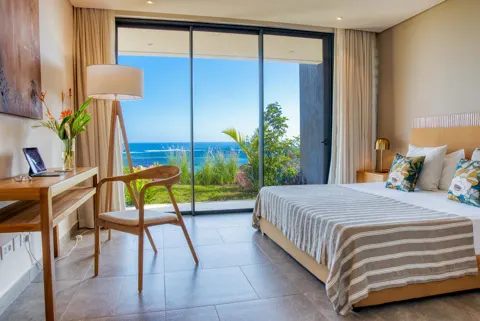
The bioclimatic Villas Nomadic and Les Vues d’Anbalaba apartments offer spacious, comfortable living areas. The development provides hotel services, a restaurant with Wi-Fi and a dedicated on-site team.
You can stay for several weeks in a rental property, or buy a villa and entrust its management to the team while you are away.
Frequently asked questions about slow travel in Mauritius
Slow travel means travelling less often but staying longer. You choose a destination, settle in for several weeks and experience life at the local pace.
Can you stay in Mauritius for more than six months?
Yes, with the appropriate visa. A stay of more than 180 days in a year requires a Premium Visa. It is free of charge, valid for six months to one year and renewable.
Can you work remotely from Mauritius?
Yes, provided your work and income come from outside Mauritius. The Premium Visa is designed for this purpose. You cannot work for a Mauritian employer on this visa.
Can children attend school during a longer stay?
Yes, at private schools on the island, subject to availability. French and international schools may accept enrolments partway through the academic year. Homeschooling through the CNED is another option.
What is the time difference between Mauritius and Europe?
Mauritius is two to three hours ahead of Central Europe, depending on the season. The island is in the same time zone as Dubai.
Can you buy a villa and rent it out for the rest of the year?
Yes, through approved property development schemes. A property management team can handle marketing, guest arrivals and the day-to-day management of your villa.