



Inheritance and succession: key considerations when investing in property in Mauritius
Some properties are bought for ourselves, while others are bought for those who will come after us. A villa in Mauritius often falls into the latter category: a place already imagined filled with children and grandchildren, a family anchor that spans generations rather than simply another asset to own.
But beyond the emotional aspect, investing in property in Mauritius also has very practical implications for how that wealth will one day be passed on. The Mauritian legal framework, which is often little known, holds some pleasant surprises for those who take the time to explore it. Here is what you need to know — not as a substitute for advice from a notary or wealth adviser, but as a way to ask the right questions at the right time.
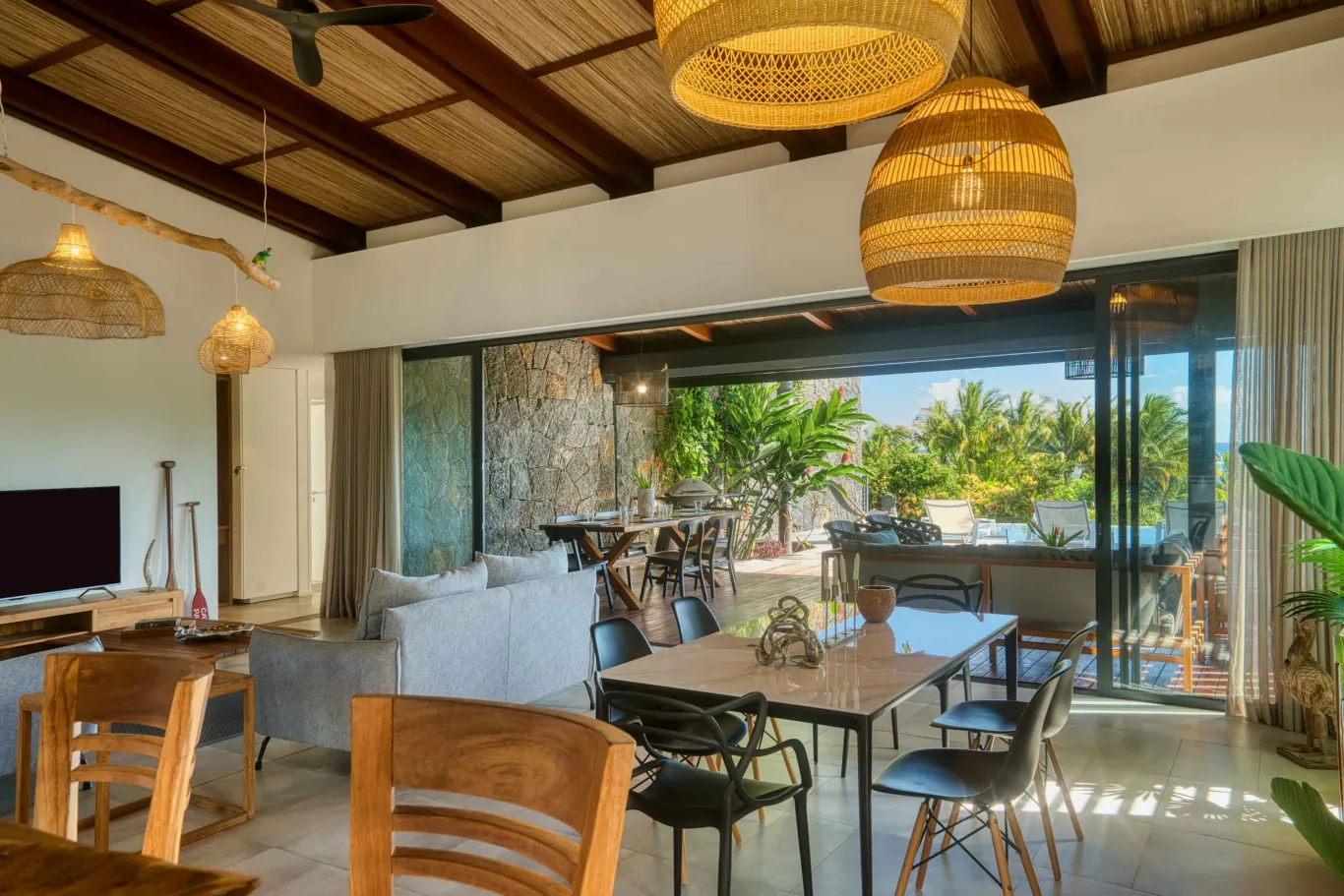
Discover everything you need to know about inheritance and succession in Mauritius in our article, so you can make the most of your property investment.
An investment designed to span generations
Before even considering inheritance, there is the question of how the property will be used.
This dimension changes the way we think about a purchase. It is no longer simply about “what rental yield can it generate?” or “what capital gain could we make on resale?”, but rather “what kind of place do we want to pass on, and in what condition?”. A well-designed and well-maintained property, located within a professionally managed estate, is easier to pass on than one that requires constant attention to remain in good condition.
Between family stays, there is also nothing to prevent the property from being offered for seasonal rental, thanks to the hotel-style services available within the estate. It is a practical way to keep the property in use throughout the year rather than leaving it closed between visits, while also generating income that could, in time, help fund its upkeep for future generations.
The absence of inheritance tax: a rare advantage
This is probably the most significant point, and yet one of the least well-known: Mauritius has no inheritance tax, gift tax or wealth tax on property. When a property located in Mauritius is transferred as part of an inheritance, the transfer is not subject to tax. Certain property transfers linked to an inheritance may also benefit from exemptions from registration duties and transfer taxes, particularly transfers between heirs of assets acquired through inheritance.
This point deserves to be clearly understood: in many countries, passing property wealth on to children can represent a significant tax burden, sometimes to the point of forcing heirs to sell a property to which they were attached because they cannot afford to pay the taxes due. In Mauritius, the transfer of the property is not subject to inheritance tax, while certain transfers between heirs may also benefit from exemptions from duties and taxes.
It is important, however, to bear in mind that the applicable tax rules will also depend on the heir’s country of residence. In some cases, international assets may remain taxable under the rules of the heir’s own country, including property located abroad. The absence of inheritance tax in Mauritius therefore does not remove the need for comprehensive wealth planning, but it can significantly simplify one part of the process.
It should also be noted that Mauritius currently has no gift tax either. Subject to the applicable conditions, a parent can therefore transfer a property, or a share of it, to their children without triggering local taxation on the transaction — an option that some families choose to plan ahead for the transfer of their assets rather than waiting for an inheritance to take effect.
What Mauritian succession law says
Mauritian succession law combines roots in French civil law, inherited in particular from the Napoleonic Code, with elements of British common law, reflecting the island’s colonial history. The Napoleonic Code, introduced in Mauritius in 1808, still forms one of the foundations of the Mauritian Civil Code today. In practical terms, this means two important things for a future property owner.
First, property located in Mauritius is subject to Mauritian law, regardless of the owner’s nationality — this is the principle of lex rei sitae, meaning the law of the place where the property is located. Mauritian rules apply in particular to rights relating to property situated in Mauritius, regardless of the owner’s nationality.
Second, Mauritian law places limits on testamentary freedom and provides, in particular, protective rules for certain heirs. This is something to anticipate with a professional if your family situation is complex (blended family, children from different relationships, or a wish to favour a particular heir), as it will directly influence how you structure your purchase.
A home for the whole family
The wealth-planning dimension of a property investment in Mauritius is not limited to passing the property on to future generations. Certain property schemes also allow foreign purchasers and their families to obtain a residence permit, making the property a genuine family home, both today and for the future.
At Domaine d’Anbalaba, the acquisition falls under the Integrated Resort Scheme (IRS). An investment of at least USD 375,000 in an eligible property allows the non-citizen owner to obtain a residence permit, valid for as long as they retain ownership of the property. The scheme also extends to their spouse or partner and dependent children under the age of 24. Holders of a residence permit obtained under the IRS are also exempt from the need for a work or occupation permit to work in Mauritius.
The Property Development Scheme (PDS) is based on a similar principle. Purchasing an eligible villa for more than USD 375,000 entitles the purchaser to resident status, with a residence permit also available to their spouse or partner and children under the age of 24. A PDS residence permit holder may likewise work in Mauritius without a separate work or occupation permit.
Other acquisition routes are also available. Under the G+2 Scheme, a non-citizen may purchase an apartment in a building with at least two floors above ground level, subject to EDB approval, for a minimum price of MUR 6 million. A residence permit may be obtained when the property price reaches at least USD 375,000.
The Smart City Scheme (SCS) allows non-citizens to purchase residential properties in approved Smart City developments. Purchasing a residential property valued above USD 375,000 also allows the purchaser to apply for a residence permit, subject to the specific conditions of the scheme.
Beyond the administrative aspects, it is above all the possibility of turning a property in Mauritius into a shared family home that gives this type of investment its particular wealth-planning dimension. Parents can stay there with their children and grandchildren, holidays can be enjoyed there year after year, and a connection with Mauritius can be built long before succession ever becomes an issue.
How to structure the purchase around your family plans
Depending on the applicable property scheme and the purchaser’s circumstances, Mauritian law offers considerable flexibility in how property can be held, allowing the purchase structure to be tailored to the intended succession plan.
- Purchasing in your own name remains the simplest option for a couple or individual investor. The property then forms part of the estate, in accordance with the rules outlined above.
- Purchasing jointly (co-ownership), between several members of the same family (for example, siblings or parents and children), allows several generations to be involved from the outset. However, this option requires careful consideration of how the property will be managed: who decides whether to rent it out, how it will be maintained, and whether it should eventually be sold.
- Purchasing through a company, trust or foundation offers greater flexibility when planning a gradual transfer of assets, particularly when several heirs or generations are involved. Mauritian law formally recognises trusts, which make it possible to separate legal ownership of the property from the right of beneficiaries to enjoy its benefits — an option frequently used in international wealth planning.
None of these options is universally better than the others: the right choice depends on your family circumstances, your country of tax residence and your long-term objectives. This is precisely the type of decision to make with a notary or wealth adviser, ideally before signing the purchase deed rather than afterwards.
A wealth-planning strategy that goes beyond tax considerations
If we had to sum up the appeal of Mauritius for a family succession strategy, taxation would only be part of the answer. The other part lies in the country’s stability: a clear legal framework for foreign buyers, a stable currency, a peaceful political climate and a property market recognised for the security of its transactions.
There is also another factor that is less often discussed but just as significant: the emotional connection created by a place shared across generations. A property to which a family is emotionally attached is passed down differently from a purely financial asset. It becomes an anchor, a familiar destination for family gatherings, a shared memory that people naturally want to preserve rather than sell at the first opportunity.
This is the dimension embodied by the villas at Domaine d’Anbalaba: places designed to be lived in, shared and passed down, within an estate that takes care of the property’s management and maintenance, including for heirs who may not have the time or desire to handle these responsibilities themselves on a day-to-day basis.

Frequently Asked Questions about passing on property in Mauritius
No. Mauritius has no inheritance tax, gift tax or wealth tax. Property transfers linked to an inheritance may also benefit from exemptions from transfer tax and registration duties.
Does Mauritian law allow me to freely leave my property to anyone I choose?
Partly. It is possible to make a will, but Mauritian law places limits on testamentary freedom and provides, in particular, protective rules for certain heirs.
Can my family obtain a residence permit through my property purchase?
Yes, subject to certain conditions. For a property acquired under the Integrated Resort Scheme (IRS) for at least USD 375,000, the non-citizen owner may obtain a residence permit, which may also be granted to their spouse or partner and children under the age of 24, subject to the applicable conditions.
Which purchase structure should I choose to plan for a family succession?
This depends on your circumstances: purchasing in your own name, jointly with several family members, or through a company or trust recognised under Mauritian law. Professional advice from a notary or wealth adviser is recommended to choose the structure best suited to your plans.
Does the tax system in my country of residence also apply to my Mauritian property?
This depends on the tax rules of your country of residence, which may, in some cases, apply to your worldwide assets. We recommend discussing your situation with a tax adviser in your country of residence, in addition to considering the applicable rules in Mauritius.

To find out more...
Would you like to understand how a villa at Domaine d’Anbalaba could fit into your family succession strategy?
Our team is here to present the available properties and put you in touch with the right professionals (notaries, wealth advisers) to help you build a plan tailored to your family.